|
NEIL SLADE- QUESTIONS AND ANSWERS For Coast to Coast AM July 14, 2025
1) Who are you, what exactly do you do, and what is your training? My earliest memory is that of performing music, as a four year old singing in a nursery school program a solo song by Alvin and the Chipmunks, something about Alvin and a girl chipmunk. The only other possibly earlier memory is being in a crib and watching my sister stick her head out the window so she could catch a cold and avoid going to school the next day.
By the time I was five, I was already a paid professional musician- my Uncle Merrill, who was a professional trumpet player for New York City Broadway play orchestras, paid me a nickel to sing “He’s got the whole world in his hands” at a gathering of my relatives on my grandfather’s chicken farm in central New Jersey Soon after that, my mom bought me an old 19th century upright piano that I would plink on from time to time, self taught, until she signed me up for piano lessons from the prestigious Lamont School of Music at the University of Denver. That didn’t last very long as both my sister and I didn’t like the piano teacher very much, and I got sick to my stomach after the second lesson- and that was the end of that.
My mom’s brother, like Uncle Merrill was also a professional musician. He played tenor saxophone in the Catskills Mountains vacation resort hotels in the summers after World War II. I actually share some genetic material with this Uncle Dave, so when it was time to pick a band instrument to play in elementary school mom persuaded me to pick the saxophone. So in the 4th grade my folks bought me a shiny new Conn alto saxophone, and I played that all the way through high school. In the 10th grade I was introduced by a fellow student to a musician by the name of Frank Zappa. I related to Zappa because like him I was a bit of an outsider with a bizarre sense of humor, and attracted to the counter culture.
Zappa made his first public appearance playing a bicycle on the Steve Allen Tonight show in 1963. It consisted of him hitting various parts of the bike frame and wheels with a drumstick, and blowing through the handlebars like a trumpet, to the accompaniment of the shows orchestra.
Frank was a self taught composer, not only of rock and roll music, but was a self taught classical orchestra composer. And before long he had inspired me to begin composing my own odd music for piano and saxophone.
I eventually met Frank as a 17 year old after sneaking into a local radio station where he was doing a interview for a tour he was on. He was quite polite and gave me this advice, “Remember you are employed and working for the muse.”
So I continued writing music, and started recording my efforts on whatever cheap tape recorder I could find. But my first actual record came about when I stepped into this sound recording booth located on the 86th floor of the Empire State Building some time in the mid 60’s. The contraption was called a “Voice-O-Graph”, and for something like 50cents, accompanying myself with my ukulele, I sung into the microphone this song I wrote called, “I Love Hawaii Because The Fish Smell So Much”. After my two minute rendition, it spit out a genuine floppy vinyl disc 45 rpm record of the performance. I don’t know what ever happened to that record, but I swear I’d pay a couple hundred dollars to have it again.
Eventually I graduated from high school, barely, and actually went back to the Lamont School of Music at the University of Denver for my college musical education. Not unlike my first experience with the Lamont piano lessons, I dropped out of DU and instead transferred to the Metro State College School of Music, where I studied both classical and jazz music, and earned my degree in music.
During college I started playing professionally, and eventually began giving concerts and solo performances around Colorado, as well as recording original music albums in actual recording studios around town.
For two years after graduation I was hired as a music and art therapist working not only in the public school system, but in giving creativity workshops for the elderly in nursing homes and inside numerous mental health facilities in Denver.
In 1982 I met my brain mentor T.D. Lingo, and began to incorporate his methods of amygdala clicking and brain self-control into my performances and workshop. This culminated in a solo concert I presented at the Gerald Ford Amphitheater in Vail Colorado, where I instructed a somewhat baffled audience of several hundred tourists, golfers, and Republicans the means by which they could tickle their amygdala and switch on their frontal lobes all to the strains of my own brain music. Decades later, I believe none of them actually believed me.
2) How did you come to be involved in brain research?
I first became interested in the brain via my curiosity about achieving altered states of consciousness without having to resort to using LSD and other mind bending chemicals as a teenager. In high school, I had imbibed in such recreational activity, when one of my friends suggested a person could achieve such altered states by doing yoga. This was further supported by a fellow a couple years later who I ran into at DU who taught what he called “Instant Meditation”. He was an ex-meat packing company CEO who dropped out to become a flower salesman on the streets of Denver, and used to host meditation sessions in his living room. There he would tell people they could get as high as on pot or even acid by meditation and cleaning out their brain’s “data banks”.
So with this background and interest in exploring cosmic consciousness, one late night as a 27 year old, I was watching our local PBS station, and stumbled across a show that had this guy in buckskins up in the mountains talking about the human brain. He ran what he called a “Brain In Nature” summer camp, and this TV documentary featured participants at the camp describing strange changes in perception and heightened senses and awareness as the result of learning some basics about how the human brain worked, and through applying methods of brain self-control.
You can see this documentary on Youtube today. https://www.youtube.com/watch?v=G1yBWvROBY0&t=386s
It all looked fascinating to me, and at the end of the program there was a segment featuring the director of the camp. His name was T.D. Lingo, and he gave instructions on the air for anybody wishing to learn more, and how to visit the mountain facility. This sounded too good to pass up, and within weeks I found myself at the very place I had seen on the program- The Dormant Brain Research and Development Laboratory, located 40 miles west of Denver at 9000 feet elevation in the back woods wilderness, with no phones, running water, or electricity. It was a place where people would go to explore the workings of their own brain- with no interference from TV, newspaper, radio, neighbors or other distractions of city life.
It all looked fascinating to me, It sounded too good to pass up, and within weeks I found myself at the very place I had seen on the program.
I drove up there every few weeks when the roads were clear enough, and for 11 years I studied brain and behavior science inside the rough wood stove heated log cabin, and up on the dirt trails hauling firewood. I ended up years later as Lingo’s primary assistant in developing programs, running workshops, and getting out education material to the general public.
3) What was T.D. Lingo’s background and history?
Lingo’s own history began with his study of psychology during the 1950’s at the University of Chicago. It was there that he asked his professor of neurology, “Why did I have to kill my brothers in World War II?” To that Lingo explains his professor pointed to his own gray hair covered skull and exclaimed, “I don’t know the answer to that question, but if there is an answer, it’ll be found inside the human brain.” The professor explained that nobody had an answer to that question, and if Lingo wanted an explanation he would have to discover it himself.
So, determined to find the answer to the question of war, Lingo was determined to create his own brain research facility. Unfortunately, he had no money to build such a place. But he did have a guitar, and knew how to play three chords. So he set about making a name for himself singing folksongs around the bars and coffee shops in Denver, hoping to eventually strike it big in show business. Folk singing was starting to be a big thing, and by good luck he eventually landed a spot on Groucho Marx’s TV show You Bet Your Life, where he played the part of a rough mountain back woodsman complete with his own suit of buckskins and feigned wilderness accent.
This program excerpt is on Youtube https://www.youtube.com/watch?v=cDMEPqijQ0Y
On that show he made a resounding positive impression on a top level NBC TV producer, who pronounced upon seeing Lingo, “I know a phony when I see one, and that guy is a great one.” Consequently, the network official arranged for Lingo to host a summer replacement show on which he sang folksongs and hosted guests such as Burl Ives and Pete Seeger, At the end of the shows summer series Lingo looked straight into the camera and said, “I’m looking for a mountain to build a log cabin on- if anybody watching has one to sell- call me.” And somebody did.
Lingo explained, “I took my two grocery sacks full of money from the show, gave one to the IRS, and with the other one I bought 250 acres of wilderness in the Colorado Rockies. There I began to build my log cabins where in a few years I would run my brain research facility high in the wilds of mother nature.”
4) What was the Dormant Brain and Behavior Research Lab?
For 35 years Lingo ran a program of self-exploration and the study of human brain and behavior. This was the program featured in the PBS documentary that I saw on TV that late night.
Lingo wrote all of his papers and essays in a rather unconventional and idiosyncratic manner, and the vast majority had difficulty relating to his observations, his research, and his proposed methodology. So in 1989, driving back to Denver on a 500 mile road trip, I dictated into a tape recorder all I had learned and absorbed from Lingo, and came up with the contents of my first book, The Frontal Lobes Handbook. I typed it all out, self-published and hand bound the very first copies back in 1992. Years later after Lingo passed away, I revised and improved upon the book with another six years of experience and teaching of brain and behavior under my belt, and this at last emerged and delivered to the public, announced on Coast to Coast AM in 1998 as The Frontal Lobes Supercharge. Since that time the book has remained in print for over 27 years, and additionally was translated and sold by the European publishing house Rowholt Verlag, known for publishing a host of Pulitzer Prize winning authors.
5) Define “brain self-control”-
Brain self-control is the ability to consciously call upon one’s own known brain functions at will, as opposed to being at the mercy of one’s genetic or predisposed neurological reactions. To put it simply, brain self-control means being the puppet master rather than being a puppet whose strings are controlled by someone else or by one’s habits.
Brain self-control means knowing how the human brain works on a fundamental level, and to use what mental tools one has in meeting one’s goals or purpose.
6) How do you view how the human brain works?
I’ve found Paul MacLean’s model of the brain, known as the “triune brain theory”, most useful, and most easily related to by most people who have an average or little understanding of brain function- and useful even for those with an advanced understanding of human brain physiology.
MacLean was a well known brain scientist as well as a physician who came out of Yale University, and who presided at NIMN (National Institute of Mental Health) for fourteen years as the director of the Laboratory of Neurophysiology beginning in 1957. From 1971 to 1985 he headed the newly formed Laboratory of Brain Evolution and Behavior, a research facility that studied and compared neural-behaviors among various kinds of animals and how that related to human beings.
The Triune Brain-
MacLean is most famous for the evolutionary “triune” theory of the human brain, a simple model of looking at human brain behavior and function. The triune theory states that “The human brain is three brains in one- hence, “tri-une”. It is a theory that gained popularity in the 1960’s and was championed by such people as Carl Sagan among many others.
At its most fundamental level the triune theory of the brain proposes that the human brain is composed of three distinct layers, each with its own distinct purpose and function.
According to the triune model of the brain, the brain has an innermost core which is labeled the r-complex, or in common language the “reptile brain”. The reptile brain is so-called because this area of the brain is largely involved in processing the same type of brain functions seen in reptiles, seen as emotionless reactive behaviors. This innermost portion of the human brain is responsible for autonomic nerve functions that happen without any conscious control or learned behavior, This would be such things as breathing, heart beat, regulating body temperature, and automatic reactive behaviors such as self-defense or counter attack. As some describe it, the joke goes that the reptile brain computes the four-F’s of human behavior: Feeding, Fleeing, Fighting, and Reproduction.
Surrounding this reptilian core brain is a secondary layer of tissue and brain, perhaps like the core of an apple around the seeds. MacLean surmised that this part of the brain evolved with the emergence of mammals long ago in pre-historic times. This is called the “mammal brain” as this area of the brain can be found to involve more complex behaviors found in mammals, such as nurturing young, and simple social behaviors, and in experiencing emotions. The scientific name for this second layer is called “the limbic system” or paleo-mammalian brain, or old mammal brain. This is where MacLean proposed where the production of these more complex mammalian behaviors originated. While as a general rule reptiles lay their eggs and leave the nest unattended, “Kids your on your own”. By contrast, mammals raise and teach their offspring. Mammals are also capable of complex group behavior, such as hunting in packs or defending other individuals in the group when under threat. Mammals also can be seen to display more complex emotions reflected in facial expressions or happily wagging tails, as opposed to the wide eyed emotionless stare of reptiles.
Lingo described the difference in behavior between reptiles and mammals in that the reptile brain only computes “me me me” 100% competitive consciousness, while the mammal brain computes 50% competitive consciousness and 50% cooperative consciousness.
As early primates such as monkeys and apes evolved from more ancient mammals, MacLean proposed that a third layer of the brain emerged, further surrounding the mammal portions of the brain. This he called the “primate brain”. The scientific name for this layer is called the “neo-cortex” or “new mammal” brain. It is the wrinkly convoluted maze of brain tissue that we see when looking at a human brain. It is in this area we find the more complex kinds of behaviors. In the human brain, the primate brain adds on areas responsible for advanced thinking such as language, abstract thought, and planning.
The front one third of the primate brain is known as the frontal lobes or prefrontal cortex, and is known commonly as the “executive” branch of the brain, responsible for conscious overall control over the more basic levels of brain function, such as understanding cause and effect. Notably, this portion of the brain is one of the last brain areas to mature, and is said to not fully develop in humans until the age of around 25 years. This maturation process is important for developing skills like planning, decision-making, and self-control. The lack of prefrontal development is seen as the reason for impulsive behavior often seen in teenagers.
Much of what is known about the frontal lobes was learned by observation of persons who have had damage to that part of the brain. Notably, in the 19th century a railroad worker by the name of Phineus Gage accidentally had his frontal lobes separated from the rest of his brain while he was preparing an explosive charge meant to blast out some rock. Instead he blasted out a big chunk of his brain.
The accident occurred in 1848 and propelled an iron rod through his skull, decimating his left frontal lobe. His case is famous because he was the first patient to known survive such a large and dramatic trauma to one’s brain, and provided an opportunity to suggest a link between brain trauma and personality change. Gage's survival and unmistakable personality changes provided evidence that the frontal lobes are crucial for regulating personality, behavior, and social functioning. It is interesting to note that his most serious mental changes had been temporary, and were largely overcome in the years that followed. This in fact demonstrates the brain’s plasticity and its ability to adapt even in the face of major physical trauma and damage.
Triune Theory Revisited-
However, the triune theory, developed by MacLean in the 1960s is now largely seen by neuroscientists as an oversimplified model of brain function. Modern neuroscience research has shown that brain function is far more complex and interconnected than the triune brain theory may initially and superficially suggest. I.e.,…
a) The brain doesn't operate in distinct layers like the theory proposes. b) Neural structures are interwoven and interact dynamically. c) Behaviors attributed to the "reptilian brain" are also influenced by other brain regions, and vice versa.
For example, the "paleo-mammalian" trait of parental care of offspring is widespread in birds and occurs in some fishes as well. Now, even crocodiles, a clear example of a reptile, are known to care for their young for a time after hatching from the egg.
Further, where as tool making was once seen as the product of the more advance primate brain, there is now ample evidence for tool making and use among birds, invertebrates such as octopuses, and even in insects such as ants. Further, parrots have been known to use syntax while speaking in a human voice, as parrots are known to do, In the famous recent case of one, Alex, an African grey parrot, he was repeatedly observed to construct meaningful original sentences and to understand their meaning, This was something unmistakable despite a bird’s brain-physiology which is vastly different from the language neurophysiology seen in a human brain.
It’s important to know that in describing how the human brain works, T.D. Lingo interpreted MacLean’s model of the triune brain as jumping off point and as a tool for identifying and understanding human behavior. In this case, it matters little exactly how the brain’s neural-circuitry is interconnected or exactly where the location of a particular behavior originates or resides, The behavior is defined by its action and expression and not by its specific location in the brain.
A gunman who yields a weapon to kill innocent victims is still exhibiting unmistakable reptilian attack-counter attack behaviors, even though such behavior is further modified by the use of modern weapons designed by advanced human brain intelligence and invention only made possible by frontal lobes circuitry. Conversely, a person donating food to a local food bank is expressing advanced frontal lobes behavior of empathy, compassion and planning, despite the simplicity of merely handing over a can of food that doesn’t take any kind of genius invention or planning and that the reptile brain is still engaged in regulating breathing and other simple reptile brain functions while performing an act of charity.
So understanding human behavior by utilizing MacLean’s simple definition and categorizing of behaviors as being reptilian, mammalian or advanced primate behaviors remains a totally valid use of the triune theory in the service of behavior modification,. As far as I’ve seen as a teacher for the past 50 years, Lingo’s philosophy and practical use of the general principals laid out by MacLean’s triune theory remains unmatched by any other model of human behavior.
7) What is the amygdala and what is clicking or tickling it all about?
The amygdala is part of the limbic system, or old mammal brain. It is a little almond or walnut shaped piece of brain tissue or brain organ about the size of the tip of your thumb. You have two amygdala, one for each hemisphere of the brain, and each one is located approximately one inch or so directly inside from the front of your ear. Scroll down my web site’s main page at www.BrainRadar.com to see a couple of illustrations and photos showing where it is and what it looks like. Although you have two amygdala it is generally referred to in the singular sense- amygdala rather than the dual sense in which two are known as amygdali. The name amygdala is derived from the Greek word meaning nut or almond.
The amygdala has extensive network connections throughout the brain, from the innermost r-complex circuits and the autonomic pathways to the outermost prefrontal cortex. This connection is crucial for regulating emotions, making decisions, and processing emotional information. The amygdala and prefrontal cortex work together in a complex network to manage our emotional responses and behaviors.
The main purpose of the amygdala is to act as a shortcut to appropriate behaviors and responses to external events and stimuli. For example, when one perceives a threat, such as seeing a rattlesnake in one’s path, the amygdala automatically shunts energy into the brains fight or flight responses, bypassing any rational thought processes, so that we can instantaneously respond by running or fighting, instead of having to consciously think what to do. So the amygdala is commonly thought of as processing fear and negative emotional states.
However, less known to the public, is the role the amygdala plays in processing positive emotional responses from events or stimulus that we view as life enhancing or positive. This might mean properly responding upon seeing another person smile or respond to praise given to us.
The amygdala works in tandem with a nearby brain structure called the hippocampus. The hippocampus is crucial for forming new memories, especially “episodic memories”, memories of an event with strong emotional content. In both ways, the amygdala helps to process and retain memories to events that have a strong emotional content whether it is positive or negative.
The amygdala could be seen as an automatic sorting device that instantly sends energy to the appropriate part of the brain without the interference of much slower analytical thought processes.
For example, as an innocent and inexperienced small child we might see a pretty blue flower on the top of a stove, and then reach out to touch it and consequently get burned. The amygdala helps in remembering this event, so the next time the child sees the stovetop flower, he instantly recalls the pain associated with it, and quickly stops his hand from reaching out without having to think about it much.
But the amygdala doesn’t always work in our best interest, and this is known as “amygdala hijacking”. This means that we can automatically respond with fear and negative behaviors when it is not in our favor and inappropriate, eliminating higher thought processes of the frontal lobes which can more globally respond to a situation with better understanding of what may be in the best interest of ourselves and others.
An amygdala hijack happens because the amygdala processes sensory information faster than the prefrontal cortex, the rational part of the brain, leading to a swift, often impulsive, emotional response before conscious thought can intervene.
This is where “clicking the amygdala” or “tickling the amygdala” comes into play. To click or tickle the amygdala means to consciously cause an increase in advanced frontal lobes processes. The reason for doing this is that the frontal lobes are capable of seeing things long term as complex matters of cause and effects, in contrast with the reptile brain which has only nearsighted understanding of matters in the immediate vicinity.
Where the frontal lobes can understand situations from a complex wide global view and compute long range problem solving and solutions, the reptile brain can only react to what is immediately perceived, and is highly limited in solving complex and long term problems. Thus the advantages of deliberately keeping the frontal lobes active by an act of clicking or tickling it forward to engage higher thought processes and higher problem solving capacity at one’s neural fingertips.
Engaging the frontal lobes at will and out of habit can largely be of great advantage in preventing problems from occurring in the first place, or in solving problems that cannot be remedied through the automatic reactions by the limited abilities of reptile brain reactions.
Clicking or tickling the amygdala forward to engage higher frontal lobes thought processes and higher problem solving capacity at one’s neural fingertips is done by a variety of methods which may range from simply imagining the amygdala as a light switch clicking on the frontal lobes, by visualizing a feather tickling the amygdala, to utilizing the sense of smell and the olfactory nerves of the nose which are connected to the amygdala, to methods of meditation, or even most simply of just listening to the right kind of music.
8) What is the myth that you only use 10% of your brain all about? Is it true or false?
See https://www.neilslade.com/Papers/how.html - “How much of our brain do we actually use?”
"It is a myth that we only use 10% of our human brain."
It is common to hear this statement, alarmingly even from a few people who label themselves as "scientific" or as researchers. In actuality, such a comment as above, is as misleading itself than the so-called myth of unused brain potential.
Many self-defined scientific persons will say something alarmingly inaccurate such as, "You use all of your brain all of the time." This is a completely misleading statement and far from the scientific, and scientifically proven truth.
A simple look at brain scans will show us that the brain modulates dramatically from one moment to the next in regards to its activity and usage. Here it is then, on the screen of Functional MRI machines and PET scans, incontrovertible evidence that we do not use all of our brain all of the time. If brain activity modulates from lesser to greater, shown by brain scans- how could we possibly interpret this to "all brain, all the time" ? What these brain scans show only, is that there is some RELATIVE amount of activity in different regions of the brain- relative to what is being used in other portions.
Further, brain scans do not and can not show how much POTENTIAL activity a region can perform, and not indicate what that potential is. This is like turning on a radio, and having the volume on 1, or 3, out of a unknown potential scale of the volume which may or may not go up to 10.
Further, the brain is HOLISTIC, and thinking is interplay between various regions of the brain, some which may be active and some which may not be active. It is a COMBINATION of activity throughout the brain that must be considered as well, not just what is occurring in one or another portion.
What is the potential of the human brain? That's impossible to calculate.
The biggest mistake anyone can make is to believe that ANY brain scan is anything more than a very ROUGH and primitive picture that there is SOME activity occurring in a particular region of the brain, no more, and no less. It is in no way proof that "we use all of our brain", only that there is some undefined amount of activity throughout different regions of the brain, and of continual modulating amount of this activity.
In England, John Lorber did autopsies on hydrocephalics. This illness causes all but the 1/6th inch layer of brain tissue to be dissolved by acidic spinal fluid. You could literally shine a flashlight on one side of the skull and see the light on the other side. He tested the IQ's of patients before and during the disease. His findings showed that IQ remained constant up to death. Although over 90% of brain tissue was destroyed by the disease, it had no impact on what we consider to be normal intelligence in 50% of the cases.
Is your brain really necessary? https://www.science.org/doi/10.1126/science.7434023
In one case Lorber examined he wrote the following:
“There’s a young student at this university who has an IQ of 126, has gained a first class honors degree in mathematics, and is socially completely normal. And yet the boy has virtually no brain.”
“When we did a brain scan on him we saw that instead of the normal 4.5 centimeter thickness of brain tissue between the ventricles and the cortical surface, there was just a thin layer of mantle measuring a millimeter or so. His cranium is filled mainly with cerebrospinal fluid.” It was found that 50% of children who develop this disease show no mental deficiencies and fully grow into adulthood.
Below: John Lorber and X-rays of a "man with no brain"
"It is a myth that you only use 10% of your brain" is no more helpful and informative than saying, "The moon is not made of green cheese". It tells us very little, indeed.
Sir John Eccles has stated his feelings on the infinite potential of the human brain, and he won the Noble prize. In a lecture delivered at the University of Colorado, he stated in regards to the percentage of which humans use their brain:
"The human brain has infinite potential…”
- So, how can you calculate a percentage of infinity?
As it turns out, to say that "We only use 10% of our brain, or only 10% of our brain potential"- this is actually an infinitely optimistic, as well as a considerably reasonable and thoughtful perspective of the possibilities that reside inside our craniums.
10% of infinity is an infinitely big percentage after all.
8) Are there legitimate examples of paranormal brain ability like ESP?
There are countless reliable accounts that verify the human ability to manifest paranormal abilities. Lingo calculated that there are at least five “silent” senses associated with increased frontal lobes activity. It can be hypothesized that in the same way that each of the five normal senses are localized in various regions of the cortex, it may be that the five additional paranormal senses are localized in the frontal lobes. At the very least, the frontal lobes are involved in the brain’s neuro-pathways to some extent in perceiving these extra-sensory abilities.
Among the known silent senses, these appear to include: telepathy- knowing what another person is thinking, pre-cognition- knowledge of future events, clairvoyance- remote vision, clairaudience- remote auditory sense, and telekinesis- moving objects without physical contact.
Our five regular senses are passive. In the same way, it can be concluded that for most people most of the time, the occurrence of paranormal sensitivity comes about without us trying hard to make it happen. If we are in a relaxed and positive state of mind, produced by the cooperative circuits of the frontal lobes, such unlikely yet spontaneously occurring perceptions can occur. Conversely if we are computing reptile brain fight or flight emotions, and feel threatened or feel like we need to defend ourselves, such powerful brain static and noise of reptilian emergency and forceful negative emotion negativity interferes and blocks out the subtle signals that are the stuff that paranormal sense are made of.
Several web pages on my site are devoted to the scientific evidence for the demonstration of human paranormal abilities. Here are three examples:
The Great Weather Experiment and Cloudbusting-
The first one that comes to mind is about the first mass audience brain focus that I designed for Coast to Coast that we did with Art Bell 27 years ago in July of 1998. This was just my second appearance on the show, and it was an effort to get the listening audience, presumably millions of listeners, to concentrate on bringing rain to NE Florida where at the time was suffering from a heat wave and drought. Massive fires had broken out across that part of the state, and no rain was predicted.
I instructed the audience on how to click their amygdala forward to send their conscious brain energy to the ravaged part of the state, and had them visualize rain putting out the fires- specifically 10 inches of rain, which was stated by those familiar with the blazes the amount of rain needed to quench the flames.
As if by magic, and totally unexpected, even during the program the radar images show the beginning of cloud formation in the target area, and within the allotted few days I predicted on the show, massive clouds moved into the region and it began to rain- and didn’t stop until 10 inches of rain was delivered, ending the drought and putting out the fires. The evidence and radar images are shown on my web site as “The Great Weather Experiment”
Earlier on that same broadcast I related my experiences with “Cloud Busting”, the ability to vaporize targeted cumulus clouds in the sky without affecting other surrounding clouds. I had first heard about this unusual skill in a book called Yoga, Youth, and Reincarnation in which the author describes cloud busting and the method of doing it. I described the process on the show, and subsequently heard from listeners throughout the US who claimed success doing it. I also provided my spontaneous video taped images that I took in my backyard, doing precisely this technique, unrehearsed and unedited on my very first attempt to demonstrate the ability. It’s notable that years later actor George Clooney referred to cloud busting in the movie “Men Who Stare At Goats”, that comedic segment still found today on Youtube, although it shows the process occurring in seconds, where in practice it usually takes perhaps two or three minutes. Cloudbursting
Dynamo Jack-
Another scientifically evaluated individual I feature on my site was a healer found on the island of Java in Indonesia. I was introduced to this fellow from a documentary produced by two modern explorers, Lawrence and Lorne Blair. Their movie was called “Ring of Fire”, and it showed the extraordinary things they encountered on a years long journey through Indonesia, including some vast remote areas of Borneo, then still inhabited by primitive headhunting tribes.
It was an eye infection that brought Lorne into the hands of a medical practitioner by the name of John Chang, affectionately known as “Dynamo Jack” by his faithful patients and associates. John was able to produce strong measurable amounts of electrical current in his abdomen and hands, which he used to employ electrical acupuncture to needy patients. This ability was caught on camera to the astonishment of the crew and one camera person received a strong electric shock by merely placing her hand on Jack’s stomach for a brief second. Lorne’s eye infection was indeed cured, and in the following years Lawrence Blair returned to visit Chang with a group of skeptical scientists who tested for any sign of fakery. Stripping down to his underwear they could find nothing. No electric generators at least. Chang further illustrated his paranormal powers by lighting up a bare LED light held in his fingertips, as well as the uncanny ability to thrust a bamboo chopstick through a one inch table top of solid wood, a feat no one else could even begin to duplicate. He further demonstrated the remarkable ability to move objects simply by concentrating on them, such as knocking over a VCR tape set upon a desk many feet away.
But most impressive of Chang’s abilities was his demonstration of setting a crumpled newspaper on fire, simply by focusing the energy emanating from his bare hand held a few inches away from the soon to be charred newsprint- and nothing up his sleeves.
Chang explained that he gained such abilities from many years of meditation, and that anyone was capable of such abilities given practice and concentration.
I link to Blair’s video documentation of all of this on my web page titled “Fire Brain Man”.
I personally spoke with Blair about all of this sinceon one afternoon since he lived for a time 40 minutes away from me in Boulder, Colorado. I feature portions of our conversation about Chang and other extraordinary things in Tickle Your Amygdala.
Uri Geller-
One famous exponent of paranormal abilities that I’ve spoken to and feature briefly on my site is Uri Geller. I had first heard about his exploits and claimed powers watching his various appearances on 1970’s TV shows like The Mike Douglass Show and The Tonight Show with Johnny Carson. He’s bared the brunt of heavy criticism and accusations of being a phony, as well as being embarrassed by his inability to manifest such abilities on one notable Tonight show appearance, at which time he was surrounded by non-believers such as the so-called Amazing Randi and Carson himself. Geller has stated many times that his abilities are readily affected by the thoughts of those people in his presence, and that his inability to produce results on that show reflected the desired outcome of his hosts. What is little known about that show is that during a commercial break, a spoon only held in the hands of another guest, Ricardo Motelbon was found to have bent out of shape without Geller as much as touching it.
Geller has stated that his failure on The Tonight Show was the beset thing that ever happened to him, and that the show's controversy catapulted him into instant stardom and opportunity.
On a web page I built regarding Geller, I reference a study in 1973 by Eldon Byrd, a physicist at the U.S. Naval Surface Weapons Center, Silver Spring Maryland. Byrd designed a unique test on several occasions for Uri Geller involving a unique metal alloy called nitinol. This material actually "remembers" the shape in which it is manufactured. Byrd thoroughly tested the nitinol wire samples before presenting them to Geller, unannounced. Upon lightly touching the wire, within seconds the wire became permanently deformed. The only possible way of deforming the wire in the manner demonstrated by Geller would be by heating the wire to at least 900 degrees F. and holding and simultaneously twisting with pliers. Byrd commented on a paper regarding his tests of Geller, "There is absolutely no explanation as to how Geller bent the wire by gently touching it."
I provide the photographic evidence taken by Byrd illustrating this remarkable test on my web site.
For those wishing an unprejudiced account of Geller’s genuine abilities, carefully examined by experts who were not fooled as The Amazing Randi has erroneously claimed, including the above observations of Eldon Byrd I would recommend The Geller Papers: Scientific observations on the paranormal powers of Uri Geller compiled and edited by Charles Panati.
10) What is “brain radar” and some examples?
Brain Radar is simply the name I give overall to find oneself in the right place at the right time as a result of engaging sufficient frontal lobes CICIL neural circuits.
CICIL is an acronym used for defining frontal lobes thinking: Creativity, Imagination, Cooperation, Intuition, and Logic. If one has enough CICIL thinking going on, the passive paranormal abilities kick in, guiding one to efficient problem solving that goes beyond the everyday abilities of normal awareness.
One recent event demonstrating Brain Radar occurred recently when my wife and I needed to obtain a big corrugated cardboard box for shipping. Julia is an artist, and she had just sold a big painting that needed to be sent to California from our home in Colorado, and we needed to ship it out within a day or two. Normally we have on hand boxes that are the right size for shipping, but this particular painting was about twice the size, 30” X 40”, and we had no such boxes. In fact we needed a box just slightly bigger than this to accommodate the packing materials, as well as it needed to be 6 or so inches deep.
Our regular box supplier didn’t have such a box and a subsequent search online turned up nothing that we could find locally. And the closest thing we could find online was not suitable for packing and protecting a painting, in addition to requiring that we buy a minimum of 10 boxes making the job even more expensive.
With these obstacles in the way, we decided the evening before our needed shipping date to take the dogs for a walk down the street where we live. As we walked past an elementary school parking lot on the next block I gazed over for some reason as my eye caught something sticking out of one of the schools trash dumpster. To my astonishment, sticking out from the top of the dumpster were several large, heavy duty corrugated boxes.
I walked over there to take a closer look, and to my amazement they were perfectly clean, and looked about the right size for shipping our painting. I ran home and brought back my tape measure, and to our astonishment, the boxes were EXACTLY the right size for what we needed in width, length, as well as the required 6 inches deep.
We gleefully took one of the boxes home, astonished at the synchronicity and serendipity of our discovery. This was Brain Radar urging us to go for a walk in exactly the right time and place, and our needs were met- and all for free to boot.
On my web site years ago I built a page called “Brain Radar Week” that documented events that would spontaneously occur over the course of a week illustrating the principal of Brain Radar at work. I thought it would be fun to post a note, each time for I might personally experience one or more of such illustrating such events that went beyond the easy dismissal of sheer coincidence. I wasn’t disappointed, as something extraordinary occurred each day for the following 7 days. The web page exists on my online Library From Another Dimension- for my own record keeping, but also to share how frequently this happens when a person might have a little brain self-control under one's belt.
11) Are there examples of unexpected group brain function and focus?
Beyond the previous example of The Great Weather Experiment which was the first attempt to get a large number of people to focus on an unlikely outcome, Art Bell himself was then inspired to repeat my idea of mass brain focus on several occasions with various levels of success. One event of particular note occurred on October 18, 2001. On that occasion he instructed his audience to concentrate on the Princeton Global Consciousness Project (https://en.wikipedia.org/wiki/Global_Consciousness_Project) That project involved 39 stations all generating random numbers, and analysis of any potential changes that deviated from the production of random number sequences.
During the following evening on the October 19th show he reported a large fluctuation shown against statistical odds that occurred right at the time he told his listeners to concentrate on affecting the generation of such numbers. Art then posted a graph supplied by Princeton University illustrating the fluctuation against the norm that coincided with the listening audience’s intention. That graph can be seen HERE.
What these two experiments seem to illustrate is that the collective consciousness of large numbers of humans and their brains can potentially significantly alter reality in ways that go beyond mere coincidence and natural occurrence, and that we indeed can shape reality simply with our collective minds and brains.
ABOUT MUSIC
12) What exactly is “music”?
Music is one rare type of activity that huge numbers of people- thousands, tens of thousands, and even a million people- can appreciate and enjoy together without killing each other in the process.
It represents a type of behavior by which throngs of individuals can relate to each other on a level of cooperative consciousness and life enhancing behavior generated by the frontal lobes that represents exactly the opposite type of reptile brain group combat and conflict behavior exemplified in war.
Otherwise, this is a big question with an unmistakable humongous answer!
For starters, let’s examine the definition of the word “music”.
What is music?-
Webster's Dictionary defines music as "the art or science of combining vocal or instrumental sounds (or both) to produce beauty of form, harmony, and expression of emotion." Merriam-Webster. It encompasses the combination of sounds to create rhythm, melody, and harmony. Music can be vocal, instrumental, or even mechanical, and it is often described as pleasing to the ear.”
Is music an “art”? Most people would say so, in that an art is a skill acquired by experience, study, or observation. But 20th century avant-garde composer Charles Ives once said that “The day will come when every man while digging his potatoes will breathe his own epics and his own symphonies…” So according to Ives, music is not limited to deliberate tones created on a sound producing instrument, but should be expanded to include every day activities as well as the natural sounds occurring in nature. This would imply that music is fundamentally the experience of the joy found in the experience of life.
As for beauty created by musical instruments, voice or even by mechanical means- beauty is in the eye of the beholder- one man’s food can be another man’s poison. What one generation regards as music, another generation will equate as sheer noise. What one person will describe as “pleasing to the ear” another will reject as boring and hard to listen to.
Therein lies the unavoidable dilemma- that music is many things to many people, and although people can agree on what music is in general, when it gets down to specifics, music and the effect it has on individuals is highly variable, and cannot be exactly pinned down unambiguously.
In the late 1960’s one American musician by the name of Don Van Vliet led a rock and roll group known as Captain Beefheart and The Magic Band. They consisted of a guitar player or two, a bass player, a drummer, and Don himself singing in a rough mostly un-melodic manner seemingly completely independent of what the other band member's would be playing. In fact he was known to record his vocal parts deliberately kept out of earshot from the rest of the band and in another room altogether where he could barely hear the rest of the band and what they were doing.
At the same time, each of the other members of the band mostly played parts unrelated to each other in rhythm as well as in harmony. This impossibly chaotic presentation was for the most part rejected by the general public as nothing but spontaneous noise. However the reality was that their performances were the result of months of deliberate rehearsal with nothing at all left to chance. Eventually Beefheart’s keystone album, named Trout Mask Replica landed a permanent home in the Smithsonian Institute as being of important cultural significance.
The Simpson’s television show creator, Matt Groening, said upon first hearing the record he thought it was the worst thing he had ever heard. Eventually however, he changes his tune 180 degrees and seriously proclaimed Trout Mask to be “the greatest album of all time”, a sentiment a great many listeners and professional musicians would readily agree with.
And so with that in mind along with Ives' suggestion about finding music in potatoes, music is really what one perceives to be a source of pleasure, usually a sound of one sort or another- although being a sound may be an optional characteristic of music.
None the less, most people in this day an age would agree that music is manmade sounds linked together to produce a perceivable melody or string of notes of one sort or another. People additionally expect music to contain a regular rhythmic pulse that one can tap one’s foot to or clap hands in synchrony with. Beyond that, anything apparently is up for grabs.
Music as language-
The idea that "music is the universal language" stems from its ability to transcend cultural and linguistic barriers, and crossing across any manmade borders, connecting people through shared emotions and experiences. While not a literal language with grammatical rules, music's rhythmic, melodic, and harmonic elements resonate across diverse cultures, evoking similar emotional responses and fostering a sense of unity.
Music can express joy or sorrow, happiness or sadness, pleasure or pain, comfort or struggle, and any type of emotional experience by a human, perceived by a listener, all without uttering a single word in a familiar spoken language. It can take a variety of forms, of tempos and harmonies, as well as incorporate unfamiliar and foreign sounds. It can be stringently organized as in an orchestral performance, or it can be improvised to one degree or another. What effect music has on people is highly dependent upon an individual, and one's expectations and one’s habits.
It is interesting to note that in a research study conducted in 2009 and published in the periodical Current Biology, it found that individuals in a remote African community, previously unexposed to Western music, recognized happiness, sadness, and fear in Western jazz, classical, and rock 'n' roll music. This suggests some degree of universality in the emotional expression and recognition conveyed through certain musical elements. One potential reason for this universal recognition is the theory that Western music mimics the emotional features found in human speech, utilizing similar melodic and rhythmic structures, according to one study team member.
13) Lately there are commercials for using “white noise”, “green noise” “pink noise” and “brown noise” for relaxation and sleep—what are they talking about? Is this different from music? Is it natural or artificial?
Let’s start by defining in essence what “white noise" is and what all these other so-called colored noises are.
White noise is manmade sound that contains all frequencies within the range of human hearing at equal intensity, similar to the static from an un-tuned radio, or the sound of a big waterfall or air-conditioning fan. It's a constant, even sound that can help mask other distracting noises, making it useful for sleep, studying, and even privacy applications.
Frequency is measured in “hertz”, Hertz refers to cycles per second. In regards to sound it means the rate at which moving air vibrates. Sound is the result of an object moving in the physical environment, and causing air molecules to vibrate at one or more given frequencies. Hertz refers to the speed of the sound wave pulses past a given point. Hertz is not how loud something is, called amplitude, which is measured in decibels – but hertz is rather how low or high the pitch of a sound is.
In a young healthy person, the range of audible frequencies is roughly from a low of 20hz to a high of 20kHz (20 thousand cycles). As we get older we tend to lose the ability to hear sounds at the high end of the spectrum.
For example, a low measurement of hertz, would be created by the sound of thunder, which would be at the low end of the scale from 20hz to 120hz. Even lower is what is called “infrasound” which is below the range of human hearing, from 1hz to 20hz,
Natural sources of infrasound include earthquakes, volcanic eruptions, avalanches, and ocean waves. Notably low frequency sounds can be detected over much further distances than high frequency sounds
Animals like whales, elephants, and giraffes can make infrasound waves to communicate across vast distances. The sound of elephants walking can travel nearly 2 miles, By contrast, whales can communicate across potentially thousands of miles, due to the way sound travels in water, which is stronger than how sound travels through air.
Human speech spans from 100 to 8000 hertz, with the most crucial frequencies between 2kHz and 4 kHz (kilohertz is a thousand hertz).
Birds chirping and squawking mostly occurs between 1,000 Hz and 8,000 Hz. However, some species produce sounds outside this range, with some calls extending into infrasound (below 20 Hz) and others reaching into the ultrasonic range (above 20 kHz).
Ultrasonic sound, or ultrasound, refers to sound waves above 20,000 Hz, which is above human detection just using one's ears.
Dogs can hear from 20hz to as high as 60,000hz- and this explains why dog whistles work- and why we can’t hear them ourselves, because it exceeds our upper limit of hearing.
Bats and Mice can make and hear even higher sounds from 1khz to 100khz. Bats use these high frequency sounds for echolocation- used in targeting insects for food. Again, there are devices that reputedly drive mice crazy and out of your house, and why we can’t hear them actually emit sounds.
But back to “colored” white noise, such as green, pink, and brown noise- these are all different in that each has more emphasis or amplitude in certain frequencies than others- pink and brown has more emphasis on low frequencies, where as green noise emphasizes mid-range frequencies. You can simply EQ white noise with a tone control or EQ to reproduce these variations as you see fit.
Nature conversely presents an infinite variety of forms than do manmade noises or music, and which allows for a much broader spectrum of diversity- hence, less boredom and more brain stimulation, which results in better overall body and brain health. We can see such variety in the FRACTAL nature of things- such as the shape of clouds, mountains an trees where no pattern is ever strictly repeated for an infinite changing of form. It is interesting to note that in recent years the use of fractal mathematics i.e. unpredictable evolving numbers- is used to create the image of such natural things by computers, and show up in computer games and even in art.
THE REASON WE LIKE WHITE NOISE- is because humans have a need for the type of sounds that occur in nature, such as the sound of wind, rain, the ocean, or waterfalls and streams. As we largely live in an artificial environment, made up of flat surfaces, cubicles, and straight lines- this breeds a form of boredom and predictability, since such human made forms lack the diversity of forms found in nature.
The sound of white noise contain elements of unpredictability, and predictability in even measure. It produces the same kind of sounds we hear in nature, and why we find it useful in regaining relaxation and comfort.
SUPER WHITE NOISE-
I’ve created what I call SUPER WHITE NOISE- which is actually a SOUND COCKTAIL consisting of an appealing and particularly effective combination of natural sounds, such as the wind, waterfall, stream, and even crickets.
At the lowest levels of volume, this sound will coax the brain towards producing theta-waves due to a relaxing effect that this sound impresses on the mind. This will allow for rest when needed if lying down. It can also induce a relaxed but alert state of mind when working. Creative ideas and problem solving can occur much more easily listening to this sound. It can also be used at moderate levels to aid in meditation.
At higher volume it may aid to simultaneously block out noise and work as a creative aid as stated previous. At the highest level of amplitude, it can drown out the sound of trains passing by your bedroom windows and have the miraculous effect of making screaming neighbors invisible.
14) Why do people like Rock & Roll, and what is it that people like about it?
The intensity of sound plays the most significant role in the manner in which music affects our brain. This is because amplitude, or loudness as it’s commonly referred to, is perceived first by the most primitive regions of our brain and takes precedence over any other element in music. Metaphorically, we see the elephant first before we see all the tiny hairs on its back.
When humans hear sudden loud noises this engages the brain’s fight or flight response. For example, this occurs upon hearing the sudden and unexpected blast of a thunder clap that uncontrollably jars us into startled awareness.
Reaction to a jolt of auditory surprise is an automatic and unavoidable process produced by our brain’s most basic structures. Our pre-programmed brain hardware automatically engages a fight or flight response when it hears a sudden loud sound, and steps up our body’s ability to defend itself and increase its ability to survive under threat. The heart rate increases, blood pressure elevates, reaction time shortens, and adrenaline is pumped into the blood, instantly giving muscles more strength and speed. We can’t help but watch this reaction happen.
Music can have this same effect on the brain and body. If music contains loud percussive peaks like the deliberate slamming of a bass or snare drum, a sudden loud crescendo or cymbal crash, it will elicit the same reactive response in the body, although admittedly not to the same degree as a gunshot or explosive thunder storm crash. These loud musically intent percussive sounds will still cause the brain to react with a certain level of alarm or alertness causing an increase in pulse and blood pressure and excitement.
Did you ever try to sleep when your neighbor’s stereo was thumping out a bass line at 1 AM in the morning? It’s impossible, because our brain simply will not allow it. We cannot voluntarily shut off this inherent fight or flight reaction in the presence of loud peak sounds without stuffing foam earplugs into our ear canals or holding a pillow over our head.
But the same sound even further elevated to an earthquake shaking back beat can be used to a desired effect if standing in the middle of a dance floor, where it provides welcome stimulation and excitement with open and flailing arms. Similarly, people in drum circles will rave of the hypnotic trance it produces.
Conversely, music that lacks these kinds of percussive jolts has quite the opposite effect, and will act to sedate one. This has been deliberately utilized in many environments where the effect of calming or relaxing captive listeners is desired. An entire industry was born to utilize this effect, coining the name “elevator music” or “Muzak”.
Muzak is not unlike playing a lullaby for a toddler to coax into slumber at night. In many ways, music with a steady volume is like white noise or the sound of a fan whirring, something that not only humans find comforting but also is used to calm puppies not yet used to a new home.
The incessant thump thump thump of a hip hop beat has a similar effect as the sound of a drum march, used for centuries to prod soldiers into battle. Young males are particularly attracted to this kind of music. Their cars can be heard sometimes a block away with bass speakers loaded into their trunks transforming their entire car into one big shaking vibrating speaker, intruding upon drivers two lanes over.
The high level of young male testosterone insists that these young men view themselves as needing to pump themselves up to pronounce themselves as virile combatants and alpha males among peers and strangers alike. Loud simple repetitive thumping jacks them up into a heightened state of combat readiness, to lock horns to secure their status to all on comers and establish their male dominance in the field- at the corner stop light or in the singles bar.
I once heard Grace Slick of the Jefferson Airplane explain a scientific experiment which demonstrated that rock and roll music turns on flies and makes them reproduce twice as fast.
Make of this what you will. Like Joan Jet sang- We all love rock and roll.
15) Rock & Roll, Jazz and drugs seem to go together- Why? (Woodstock, The Beatles, The Grateful Dead) Is there a chemical connection between the two?
The key here has to do with the production of certain hormones and chemicals in the human brain.
Certain drugs change the way in which the brain secretes and absorbs certain hormones an neurotransmitters. These are chemicals in the brain that have an effect on our emotions and our perception of pleasure. Opioids, like morphine, heroin, and pharmaceutical pain killers like oxycodone cause an increase in dopamine- which is the “feel good “ brain chemical we produce when we engage in pleasurable activities. And it turns out that higher dopamine levels influence the experience of pleasure we get from listening to music. So if you are a jazz musician, or even a jazz listener and someone talks you into trying a type of opioid drug, you’ll find that the pleasure you experience listening to jazz is multiplied exponentially.
This is true listening to rock and roll as well. And in music circles, it’s no secret that musicians seem to often have access to such drugs. Unfortunately the habitual use of opioids come at a price, and you have to use more and more of these powerful drugs over time to experience the same level of pleasure, as your body and brain builds up a tolerance to their use. They also exact a fairly big price on one’s health over a long period of time. So for those unfortunate musicians who fall into this habit, not only will it wreck the normal operation of their internal organs, but they run the risk of sudden overdose. The list of professional musicians who have used such drugs to enhance their pleasure in creating and playing music is long, and a familiar one- many died from the use, and the fortunate ones escaped in time-
Tom Petty died of an accidental overdose, as did Janis Joplin. Kurt Cobain struggled with it as it relieved chronic stomach pain, and although it didn’t kill him directly, he committed suicide out of depression and frustration- which the drug could not solve.
Other musicians such as Keith Richards used heroin for years, but kicked the habit way back in 1978, and went on to continue playing and recording now into his 80’s. Miles Davis and John Coltrane were other fortunate musicians who managed to put down the needle and went on to great musical heights in the many years that followed.
Charlie Parker and Billie Holiday didn’t die of overdoses, but simply wore out their bodies too early because of their drug use. Prince died from a Fentanyl overdose, a type of exceedingly strong opiate.
Other famous musicians such as Hendrix and Michael Jackson on the other hand used another class of drugs to deal with the pressures of fame and touring. Jackson died of a propofol overdose, which is a strong sedative, while Hendrix succumbed to a barbiturate overdose in an attempt to get some sleep.
Marijuana and its chemical constituent THC, on the other hand, also increases dopamine in the brain, and is not physically addictive like opioids are. And it will indeed increase the pleasure one gets listening to or creating music Limited or occasional use does not appear to be detrimental, and even one of the components, CBD, is seen in helping, pain management, anxiety, and inflammation. It is also being explored for its potential role in neurological disorders, heart health, and skin conditions.
Chronic smoking of pot can unfortunately bring about many of the same hazards found in smoking cigarettes, but this is avoided by consuming brownies or other edible forms of the drug, although the manner in which THC is extracted from the plant material must be considered. Consuming edibles that use improperly extracted methods utilizing toxic solvents will present their own set of risks.
The downside of THC unfortunately is that although occasional and moderate use seems to be harmless and helpful, others suggest that long-term, heavy marijuana use can lead to blunted dopamine release and potential negative impacts on learning and memory.
Hallucinogens such as LSD and psilocybin mushrooms also have been found to elevate dopamine levels through a variety of ways, and the dramatic effect this has on the perception of music as well as on the creation of new music is widely known. The association of hallucinogens with popular musicians especially in the 1960’s and 70’s is recognized, among these being The Beatles, The Grateful Dead, Jimi Hendrix, The Jefferson Airplane and Pink Floyd. More current musicians having used various hallucinogens include Sting, Miley Cyrus, and ASAP Rocky- although there are doubtless scores more. Fortunately nearly all of the well known hallucinogens are not at all toxic in the normal range of dose strength, and further are not habit forming. But their effects are so pronounced, regular repeated use is not an attractive option for most people. In addition, strong doses of hallucinogens will make daily regular jobs and chores nearly impossible to carry out.
In recent years the manner of "micro-dosing" of hallucinogens has come into practice, where the user takes such a small dose of the drug that the effects of the drug are not perceived. However, the repeated administration of the drug may very well still bring about many positive benefits such as increased creativity, positive states of mind, reduction of anxiety, insights and increased problem solving ability, and more.
One substance that we are all familiar with that increases dopamine in the brain and increases our pleasurable perception of music is COFFEE and the caffeine it contains. 1 billion people worldwide drink coffee, with 67% of the US population alone drinking it daily. Coffee has been found to have numerous health benefits, but overuse, like anything else, can be a problem.
One coffee drinker in particular drank huge amounts of coffee in his life, and the result was in becoming one of the most prolific composers in history- and this was Johann Sebastian Bach. It is said that as an adult he drank up to 30 cups a day- and he lived to be 65 years old, when the average lifespan during the 1700’s was around 35-40 years.
One The moral of this story is that if you want to increase your appreciation of music and the pleasure it provides, stick to moderate amounts of coffee or pot- or simply listen to better music!
16) Music is enjoyable- but can music actually improve brain performance and learning?
Music has been found to improve various brain function such as Improved memory. When used as a mnemonic device ( a memory aid that uses techniques like acronyms, rhymes, or visual imagery to help someone remember information) it can be very effective. It has also been used in what is known as “Super Learning” This is a technique first developed in Bulgaria, where it was found to accelerate the learning of a new language from 5 to 50 times faster than without music.
Super Learning utilizes classical music at a tempo of 60 beats per minute- this would be the slow movement of a concerto or symphony, although Baroque music is most commonly used. While the left brain is working in a linear mode to digest language or math, the right brain is simultaneously engaged in processing this musical non-verbal information. Music keeps the right brain occupied and happy, and this apparently results in a happier left brain as it takes in the new information
A simple analogy might be that one can walk or run faster utilizing both arms and legs rather than trying to hop to one’s destination on one leg alone.
The human body is largely designed with b-lateral symmetry- two arms, two legs, two ears, two eyes, and so on. This structure allows us to alternate from one side to the other for better locomotion, to form more accurate stereoscopic vision, and for stereo auditory perception. And so the human brain is divided into two halves, each presiding over the other with its unique capabilities. This allows what we might call multi-tasking- just like a computer that can perform multiple actions at the same time.
EINSTEIN- And let us not forget the legendary mathematician of the 20th Century- Albert Einstein spent much of his leisure time playing the violin. His mother was an accomplished pianist who started young Albert playing the violin at the age of six.
Einstein continued playing throughout his life, even to include participation in group recitals. He frequently turned to his violin when he found himself suck on a stubborn scientific or mathematical problem.
Who knows, but that the Theory of Relativity might not have been possible without a bit of music theory on the side--.
17) How can music alter consciousness? Why do we see it used in religious ceremony?
First it is of interest to note that the oldest known musical instruments are flutes made from bone, dating back to prehistoric times. These include the oldest known musical instrument, a flute made from a cave bear femur found in Slovenia, made 60,000 years ago and attributed to a Neanderthal., Additionally flutes crated from bird bone and mammoth ivory were found in Germany and have been dated to around 43,000 years ago.
Beyond mere recreation, these instruments likely played roles in rituals and communication just like the spiritual and religious use of instruments today seen in places and occasions of worship and ceremony. This is because music plays a pivotal role in unifying the experience and pleasure derived from hearing music for all those gathered in its presence to hear it simultaneously.
Music is a key component used by shamans in more remote parts of the world as a part of rituals used for healing and for accessing inter-dimensional communications between the living and spirits residing in other realms. This can be found during ceremonial use of the hallucinogen ayahuasca in the Amazon where music and singing is a primary component of the ritual used to elicit startling visions of form, color, animals and entities.
The integration of music with mystical ceremony was discovered to be a key part of the Mazatec mushroom and morning glory healing ceremonies in the remote areas of central Mexico as found by ethno mycologist Gordon Wasson in the 1950’s.
Even in the modern United States peyote songs are a part of the rituals of the Native American Church. An ancient practice, these songs are typically accompanied by a rattle and water drums along with the taking of peyote in which vivid visions and communications with non-physical manifestations of spirit are an integral part.
In Western society the use of music in religious ceremony goes back to the 9th and 10th centuries, and was used as a method of unifying the bonds between individuals such as Monks as well as in elevating ones thoughts toward a higher state of consciousness.
Later this evolved into the singing of hymns as well as the production of church organ music, and even orchestral music exemplified by the music of Bach and Handel. Back then, the churches were major patrons of music, giving important steady employment to composers, choir directors, and teachers.
18) Some people like classical music- others prefer jazz or rock& roll. So what is the “BEST” music for the brain?
When I went to the university to study music I studied classical music, contemporary music and jazz. At the same time outside of school I continued to listen to rock and roll, especially the music of Frank Zappa and Don Van Vliet, as well as the jazz fusion albums of Mahavishnu John McLaughlin and Larry Coryell, and also Canonball Adderly who fused traditional jazz with blues and rhythm and blues.
The idea that different music did different things was obvious without reading a single book or reading a research report on the effects of music. What was made obvious was that those professors and students who were primarily involved in classical music acted differently and had a general demeanor that was strikingly different from those students and teachers involved in popular and jazz music.
CLASSICAL COMPANY
The classical musicians had a certain rigidity that largely reflected the kind of music they performed. These were serious people who talked seriously, walked seriously, and spoke seriously. It’s not that they never smiled- its just that they were more reserved about letting go a big belly laugh.
Far be it that rigidity is any kind of negative trait. Without a rigid backbone any one of us would be a spineless worm or a jelly fish. It's just that playing and learning classical music you are more preoccupied with learning and obeying the rules of that sort of music instead of breaking the rules.
When playing classical music you simply do not add notes of your own, nor deviate from what is written on the page. Your job is to follow the instructions and little more. And believe me, this is difficult and demanding task that’s decades of mostly solitary devotion, And once you learn the music and the techniques, you need to maintain them like the most intricate of exotic automobiles. In classical music where there is room for interpretation, you are given some latitude as to tempo or volume, but it is akin to driving a car down a one way street- you still have to stay in your lane and follow the speed limits.
Of course, commonly neglected these days is the historical fact that Bach, Mozart and Beethoven were absolute masters of improvisation as well. But these days generally speaking, classical musicians do not spontaneously improvise on their instruments except when they’re drunk and goofing off.
One occasion sticks in my mind in particular that well illustrates the expectations put upon a classical musician- unless you happen to be Victor Borge. For one student recital I had the nerve to inject a little humor into my performance of a Bach two-part invention by donning a pair of dark sunglasses. This had the effect of literally driving my piano professor to run into the department chairman’s office to report that I had seemed to have lost my mind, and that I appeared to, I quote, “be on drugs.” This was followed by a severe scolding never to express myself in such a way ever again or I would be expelled from the piano performance program.
I won’t go as far as to say every classical music professor I had went this far, but I could see that all of my classical music mentors generally stuck to coloring inside the lines, and you were expected to do the same.
JAZZY MUSICIANS At music college, the jazz teachers and my professors of modern music composition were characters quite apart from the people that associated with classical music. These folk were loose and liberal. They just seemed to laugh a lot more, and I felt considerably more at ease around this group. I felt like I could be myself and that I was free to express myself and my music in any way that I wished. (And let me tell you, I had some weird ideas.)
That sensibility, in fact, is one of the elements that distinguishes jazz music from many other forms of music, the fact that you get to make up a great deal of it as you go along, that you get to make it your own spontaneously. It is just as if you are cooking yourself supper and feel like putting in this ingredient or that one, and that you don’t have to exactly follow any written recipe if you don’t feel like it.
To be clear, I am not suggesting in any way that jazz music is inherently superior to classical or any other type of music. What I am pointing out is that each kind of music works differently with any individual brain and elicits a different kind of consciousness. And each is different for any individual.
Each type of music has it’s own inherent psychological effect on you depending on who that composer is and what a particular piece is. Not even all classical music effects you in the same way, as brain scans of one neurologist has indicated.
The effect of Bach in particular, as opposed to the music of Beethoven in this instance, was noted during a 2009 brain scanning experiment at Columbia University. In this experiment, neuroscientist Oliver Sacks’ brain was scanned while he listened to the music of each composer while reclining inside the gigantic donut hole of a functional MRI (magnetic resonance imagery) brain scanning machine. Sacks’ response showed significant positive emotional stimulation of his amygdala and frontal lobes when he heard the music of Bach. But no such response was observed when he listened to the music of Beethoven- even when the compositions were so similar that he could not identify which was which. And Sacks was a musician to boot.
Now, this isn’t to say Bach will tickle your amygdala and Beethoven won’t. That’s just what happened in Oliver’s brain. It could be that in your brain neither would cause you to smile internally or externally. Maybe either or both for that matter would elicit car sickness instead.
Just as Oliver Sacks’ brain indicated, you can’t lump all classical music into one bag. Bach is as different from Beethoven as his music is different from Brahms etc etc
But nor can you lump all jazz music into one big convenient bag either. In fact, you can’t do that with any “brand” of music, because brands of music only carry general traits, and those can be significantly different from one composer or band to another.
Louie Armstrong’s music from the 1930’s is very different from the music trumpeter Miles Davis produced in the late 1970s. And neither of those guys sound anything like the free form styling’s of pianist Cecil Taylor. And everybody calls all three of these musicians “jazz” musicians.
The fact is, many people don’t look much deeper than, “I like classical music” or “I prefer jazz” or “I just listen to rock” or “I’m a country music fan”. People simply fail to recognize the effects of music on their brain and body beyond a few simple generalizations.
Most people subsist on a limited musical palette, a melodic mono-diet, and I would suggest that this is true whether you live in a New York penthouse, if you live in an igloo, or if you make your home in a grass hut in the middle of the Congo. Humans are creatures of habit and conditioning, and as a rule it is the rare person who ventures outside the comfortable realms of the familiar and unchallenging.
That’s pretty much how much of us deal with music.
We turn on the same one or two or three radio stations and we generally only listen to records sung in our own native language.
That’s like walking in circles all the time. That is not how you expand your consciousness and grow your brain potential.
One of the biggest misconceptions of music is that the same piece of music will have the same effect on different people. Nothing could be further from the truth. Does the same food affect everyone in the same way?
So to claim that “Classical music is good for your brain” is as absurd as saying “Peanuts are good for everybody”, or that “Everybody loves beef tacos!” Although I had a peanut butter sandwich for lunch every day for the three years that I attended middle school, I never got tired of it. Further, although I like peanut butter and that its probably a good thing for me to eat, peanuts are capable of killing people who have a genetic peanut allergy.
Another possible misconception is that if you like a given piece of music, it will always make you smie. I can bet that a lot of people love Led Zeppelin. But how about at 1 A.M. and you’re trying to get some sleep or when you’re trying to study for your algebra final? Do you love a whole lotta that kinda’ noise then?
Just like the way in one builds a tolerance to the effect of certain drugs, we also build a tolerance to the effect that music has upon us with repeated listenings. As an analogy, the first time you shoot up heroin you feel pretty good, unless you overdo it. But after that, you have to inject more and more to get that same level of high. After a while, it doesn’t make you feel particularly that good at all and you just need the same amount to merely feel normal.
Music is the same way. The first time you hear your favorite singer’s new song it sounds amazing. And then if you’re like most people, you put the song on again and listen to it over and over. By the tenth time, its not quite as thrilling as it was the first time. And if you are bone headed enough to play it nonstop for a hundred times in a row, either your brain is completely non-functional, you have extreme short term memory problems, or you’ll find hearing the song so irritating that you’ll want to hurl your music player down the street as a catch toy for your dog.
If you heard Ode To Joy every time you switched on the radio it would quickly remind you of the Odor of Stinky Feet. But let enough time go by, wait till next Christmas again without hearing it, and it will make you feel joyful again.
So, the same piece of music, relative to how many times you’ve heard it in a row, will have a distinctly different effect- from bliss to bleeech.
The volume of music will have similar modifying effects on how it works its magic. A lullaby played next to your bed can lull you to sleep when played softly. But play the same piece of music at 120 decibels and it will have the same effect as a bulldozer coming in through your bedroom door.
Tempo or speed of music has an enormous consequence on its effect on your brain and body as well. Slow music relaxes and soothes, and fast music stimulates and excites. But this too is relative. The same snappy piece of music that you enjoyed listening to on a road trip in your car you will find entirely inappropriate laying on a gurney awaiting your heart transplant.
You have to consider what your expectations are of any given piece of music and what history you have with it, i.e. who you are. We tend to form bonds with music that we are exposed to and grow up with. If you’re a child of the forties, you have a preponderance to listen to music created and made popular then. If you grew up thirty years after that, your favorite groups and songs reflect that period of time.
It may be that young people particularly like rock- music with a simple and strong beat- simply because the predictable thump it provides imparts feelings of security along with a good dose of energy to help climb those big mountains looming in front of us when we’re young. And it provides liberty from the kind of music mom and dad might be found listening to. That’s “my generation’s” music, we all say.
It has often been observed that teenagers like exactly those things that their parents dislike, and this occurs in every generation. If your parents loved the Beatles, surely, you will reject them as you embrace rap music. And without question, your kids will toss rap music in the garbage bin and hold their noses in collective disgust as they embrace something that you will find utterly nauseating.
Music fills a need that each one of us has and helps create a balance in our psyche. We are each drawn to the type of music that fulfills a psychological or even physical need for something perhaps lacking in our life. Orderly music that is highly regimented will provide one with a feeling of stability and security. Music that is free flowing and more disorganized will provide a feeling of freedom and independence.
What music does is all a matter of relativity.
At a higher level, one then realizes that it is not enough to merely live in one language of music alone. To understand and fully appreciate and make use of the power of music it is necessary to seek out as many of the variations of styles and languages you can get our hands and ears on. It is the contrast of one style of music against another that allows you to appreciate and identify your favorites.
You will certainly have your favorites, your home base that you return to, but you can’t live without leaving your four walls. Your favorite gets very old if that’s all you get.
So what is the best music?
There is no “best” except what is best for your brain at the moment you’re in.
19) What was your Music For ESP research study all about?
I’ve been both a lover and creator of music as well as being very interested in the paranormal abilities of the brain- and so eleven years ago I created a study to determine if music could elicit a notable increase in non-sensory perceptions and to alter consciousness in a significant way either emotionally, intellectually, or in a fashion that is conventionally described as “paranormal perception” or ESP. I had 65 people take part in the study, equally divided among men and woman from ages 18 to 80, with an average age of 55 years. We had 20 post graduates, 24 college graduates, 7 with some college, and 6 with no college experience at all.
There is a Youtube video that summarizes the method and results of the trial- its on the C2C web site and the link is found at the bottom of my web site MUSIC For ESP as well as a dedicated web page at https://www.neilslade.com/music4esp.pdf
A vast variety of occupations were represented with nearly everything you could imagine, blue collar workers, white collar, doctors, lawyers, new age healers, mothers, organic farmers- you name it.
The procedure was to listen to- and this is important- to listen and listen without doing anything else- a variety of styles of music. One set of recordings for a week, for five weeks and report any unusual experiences or lack of including:
a) A "daydream" visual lasting a few moments. b) A voice- your own or another's inside your head. c) An idea or insight. d) A dream the following night or after.
Beyond the above supplied definitions, participants were encouraged and free to report anything they felt relevant to the study as a notable result of listening to the music samples.
Reported results and comments from the subjects after listening to one or more of the music samples were evaluated and labeled as:
NONE: The subject observed no additional perceptions, ideas, or events. LITTLE:. LITTLE/MODERATE: MODERATE:. MODERATE/HIGH: HIGH: The subject reported a highly important alteration in thinking, perception, idea, or an observed event linked to listening to the music.
The report conveys a significant and emotionally charged state that the subject links to listening to the music. At the end of 5 weeks 70.8% of the total group experienced moderate to high level of non-sensory perception and heightened intellectual, emotional, and perceived paranormal perception as a result of listening to one or more music samples.
5 None (7.7% of total group) 6 Little (9.2%) 8 Little/Moderate (12.3%) 11 Moderate (16.9%) 11 Moderate/High (16.9%) 24 High (36.9%)
90.6% of women experienced moderate to high response compared to 51.5% of men. Of those experiencing moderate to high levels of response to the music samples was equally divided among all levels of education- i.e. those with high school diplomas only had about the same level of response as did those with post graduate degrees and everything in between.:
High School Graduates 83.3% (out of 6 total) Some College 85.7% (out of 7) College Graduate 69.6% (out of 23) Post Graduate 78.9% (out of 19)
The following number of responses were noted:
72 Spontaneous visions 44 Dramatic positive emotion 36 Unusual, notable, or intensified nocturnal dream 27 Pronounced calm/relaxation 25 “Cosmic” connection (religious or otherwise) 22 Insight 21 Spontaneous problem solving 21 Clairaudience (auditory perception) 17 Physical sensation in the head 14 Question Answered 14 Physical sensation in the body 13 Pre-cognition event 9 Creativity Enhancement 6 Pre-cognition friend visitation 6 Olfactory sensation 6 Deceased Communication 2 Question answered in dream 2 Memory Enhancement 2 Anger/fear 2 Telekenesis (unexplained physical manifestation or event) 1 Found lost object 1 Channeling
The sound sample consisting of white noise with integrated organically produced water, fan, and cricket sounds also produced similar results to the purely musical samples among some participants. Interestingly, this sound provided the greatest polarity among participants, some favoring it greatly over the other samples, while others found that it elicited no notable response.
EEGOne participant had access to a “EPOC” commercial grade EEG measuring device, a high resolution, multi-channel, wireless neuro-headset.
In all cases except for the “pop” music, the general response was a significant increase in theta-wave production primarily in the right frontal lobes but also to include other brain areas as shown in Illus. 1 (pre-listening) and Illus. 2 (post-listening). The “pop” music had the effect of reducing theta-wave production compared to normal, before listening to music.
In order to reduce sensory interference over quieter internal states, there have been methods employed throughout human history such as to do this. Sitting silent meditation with eyes closed is one example. Such contemplative practices will enable a person to perceive all manner of subtle non-sensory information that manifests itself as spontaneous insights, inspiration, problem solving, spiritual realization and even paranormal perception.
However, this study confirms that listening to music in an otherwise quiet atmosphere is a unique tool that provides such benefits, and perhaps to a more predictable and greater measure.
The data shows that listening to music by itself provides a pleasant if not highly pleasurable means to minimize and control other interfering sensory input while allowing all kinds of other non-sensory information to manifest quickly and reliably.
Listening to the right kind of music may in fact provide the ideal blend of stimulation that allows a person to remain alert and attentive, yet relaxed. This musically prepared mental state may in fact be a perfect environment in which subtle non-sensory perception may take place and is spontaneously aroused.
However, listening to music, especially with the eyes closed in an undisturbed environment, can be seen as a bridge between a completely sensory- devoid state such as meditation, and one that overloads our senses to the point of saturation and over-excitement.
Importantly, this study also does not suggest that any type of music would elicit the same type and quantity of responses observed in this experiment.
Overly distorted, percussive, loud, highly rapid, or abstract, music was avoided as it was felt that such music would provide too much distraction to inner states of awareness. This could be true not only of modern rock music, but of “classical” music as well.
At the same time, lethargic, overly repetitive, melodically devoid, and ambient (“new age”) music was also avoided as it would likely either bore the listener or would produce over- relaxation and make the listener drowsy or put them to sleep.
The music samples used were at moderate tempos and contained moderate changes in amplitude (loudness) so that there would be no jarring beats or sudden explosions in sound. None the less, the music provided sophistication, rhythmic, melodic and harmonic content that sufficiently engaged the attention of the subjects.
When we are witnessing something new, novel, and relatively unpredictable we naturally pay more attention to what is going on. Novelty brings with it a heightened state of awareness and sensitivity. This may affect our brain globally and carry over into all manner of brain functions, even when it is just new music that we are experiencing.
The familiarity of a piece of music, whether it occurred in a piece of popular music, traditional jazz, or classical music would have the effect of reducing this heightened state of awareness to one degree or another.
Consider the thrill and attention of hearing a piece of music you’ve heard for the first few times compared to how you feel after you’ve listened to it a couple of dozen times or more. These are notably distinct experiences.
Thus, the novel and unpredictable elements within the music samples may have had the result of heightening awareness across many modes of brain perceptions as reflected in the study data.
The music used in the study was unfamiliar to most of the participants, yet not so alien in performance or style to be considered disturbing. The frequent use of improvised musical elements in the samples also contributed to the moderately unpredictable nature of the music.
Much of the music employed a great deal of non-traditional harmony not found in most classical or popular music. This is important because it has been found that music that uses traditional harmony, employing major and minor chords and scales, is inevitably interpreted as being “happy” from major harmonies and scales, or “sad” from minor harmonies and scales. This emotional connection and interpretation from harmonic elements appears to be universally recognized across cultural and societal boundaries, and may even come from a neurological basis.
By avoiding strict adherence to traditional harmony and employing non- traditional elements and quartal harmonies the music presents a more neutral emotional palette upon which a listener can draw their impressions.
This data in this study clearly shows that listening to music can act as a trigger for altered consciousness that manifests itself in a wide variety of non- sensory perceptions, extra-sensory perceptions, spontaneous intellectual processes such as insight and problem solving, and notable and unexpected positive emotional experience.
So, although we cannot predict exactly how, when, and to whom such changes in consciousness will occur, this study presents firm evidence to suggest that listening to certain kinds of music as an undisturbed and primary activity is one method of eliciting and increasing. the occurrence of such processes and experiences.
20) Your latest project is called “The Book of Magik”- but it’s a music album. Explain the title and what the album is all about-
The Book of Magik album is a “book” in the sense that each track is like a chapter in a book- each chapter, its own mystery right-brain wordless story which is slowly revealed upon repeated listenings.
It’s also what I call “brain music” and “music for ESP” as discovered by characteristics that emerged in the 2014 study of music that elicits paranormal and extra-sensory perception.
I began working on this album eleven years ago in partnership with my good friend and musician Fred Poindexter- who is a master guitar player.
I’ve worked, re-worked, revised, and remastered each composition and each track over this long period of time to get it as perfect as I could, and I’m thrilled to now present it in its final polished version—People can get the music as a digital download by itself, but I’m also now including it with any digital book that I publish and sell for free.
Notably, all my books and albums are only available exclusively on my web site and nowhere else- and all are $9.95 with the exception of my 4 volume 1111+ page autobiography (presented as a novel)- THE BOOK OF WANDS, which is $19.95
All this stuff about music and the brain is in BRAIN TUNING, and the books about brain self control are THE FRONTAL LOBES SUPERCHARGE, TICKLE YOUR AMYGDALA, and BRAIN MAGIC 2-- there’s a couple of books with T.D. Lingo (and STW down on this page) available as well.
For my music, go to www.NEILSLADEMUSIC.com also linked from BRAINRADAR.com my main site, and there you find additional info on my brain music albums.
-N.S. July 2025
Back to
The Brain Library From Another Dimension
Back to
Dormant Brain Lab Back to The Wonderfully Interesting Brain Music Adventure
-N.S. July 2025
Back to
The Brain Library From Another
Dimension
|
NEW BRAIN BOOK! TICKLE YOUR AMYGDALA
The Whole Universe Brain DVD Special 40 Hours! JUST $49
5 Books 20 Audio Albums + BONUSES
ANYWHERE IN THE WORLD
Brain Tuning a & Have Fun!
Anti-Rules
Much more at
|

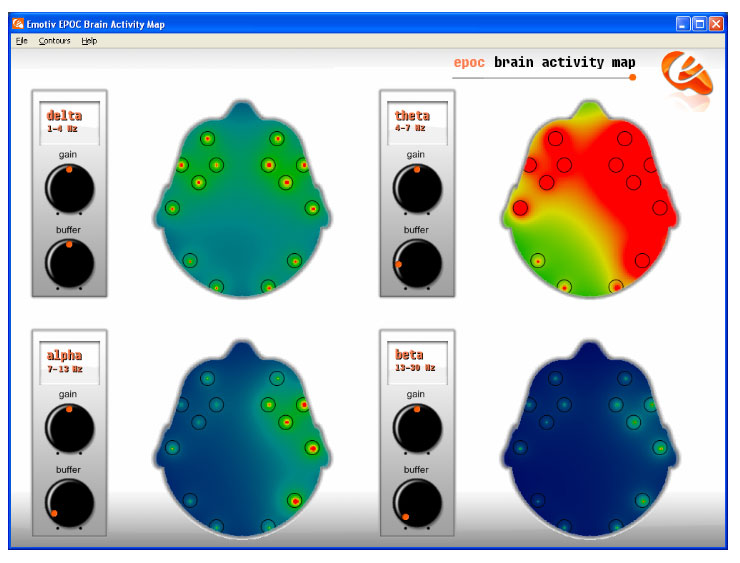




|
The AMAZING BRAIN ADVENTURE's MOST POPULAR PAGES:
Your Amazing Brain Adventure is a web site all about Tickling Your Amygdala- i.e. turning on the best part of your brain as easy as clicking on a light switch. This is done as easily as imagining a feather inside of your head stimulating a compass, the amygdala. The amygdala is a set of twin organs, a part of your brain that sits right in between the most advance part of your brain- the frontal lobes and pre-frontal cortex- and the most primitive part of your brain- your "reptile brain" and brain stem. By tickling your amygdala you instantly and directly increase creativity, intelligence, pleasure, and also make possible a spontaneous natural processes known as "paranormal abilities", although such things as telepathy and ESP are really as natural as breathing, or as easy doing simple math in your head. The ability to self stimulate the amygdala by something as simple as thought has been proven in laboratory experiments, such as those conducted at Harvard University research labs, 1999-2009, and can be tracked with modern brain scanning machines such as fMRI and PET... Indeed, thought is faster than light.
Other sites of interest: EasyPaintYourCar.com is a painting site dedicated to learning how to paint a car yourself, even if you've never painted a car before. You can refinish your car to professional standards at home, better than if you take it to someone else, and enjoy doing it at a fraction of the cost of having it done in an expensive shop. You can repair dents, rust, and use the most durable real automotive paint, and even learn to apply it without any special or expensive gear, in a safe and enjoyable manner. Paint your car in your garage, car port, or even driveway. You can spray, use an HVLP gun, or even use a roller.
Easy Make A Kindle and Your Own Publishing are sites about self-publishing and writing, and how any person can publish materials, print, online, and electronic books. You can drop out of the corporate slave labor rat race and own your own life by writing and distributing your own books on the subject that you know best.
InkJetHelper.com is a web site about escaping from the ridiculous cost of ink jet printer ink refilling- and refilling your printer for pennies instead of $70 a shot. It also has useful tips about maintaining ink jet printers, especially Canon brand printers.
Julia Lu Painting is all about the creative works of Chinese painter Julia Lu, a modern master of oil and water color painting. Julia shares her creative secrets, ideas, as well as her art work.
Off-site links Neil on Lulu Car On Lulu Tribe Blogger Wordpress Cookbook Space PaintWordpress Tripod 2 Google Wands Amazon B&N Kindle Facebook Linked GooglePlus Coast2Coast Viewzone YouTube 2 Blogtalk 1 2 3 4 5 6 7 8 9 1 2 3 4 5 6 7 8 9 1 2 3 4 5 6 7 8 9 1 2 3 4 5 6 7 8 9 a b c d e f a b c e f g h i 8 7 6 5 4 3 1 2 a b c d e f g h i a b c d e f g h i j k l m n o p q r s r u v w x y |